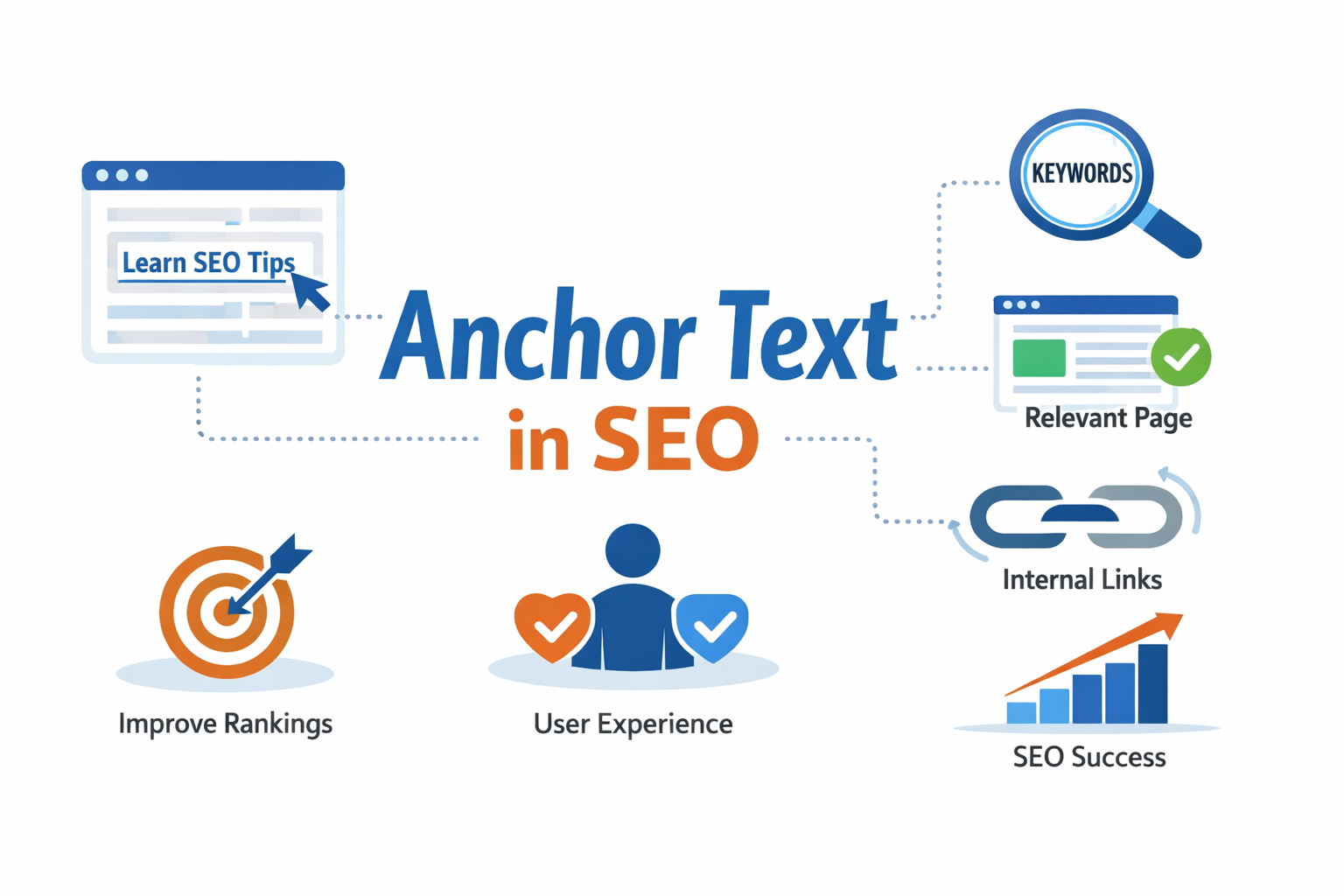
What Is Anchor Text in SEO?
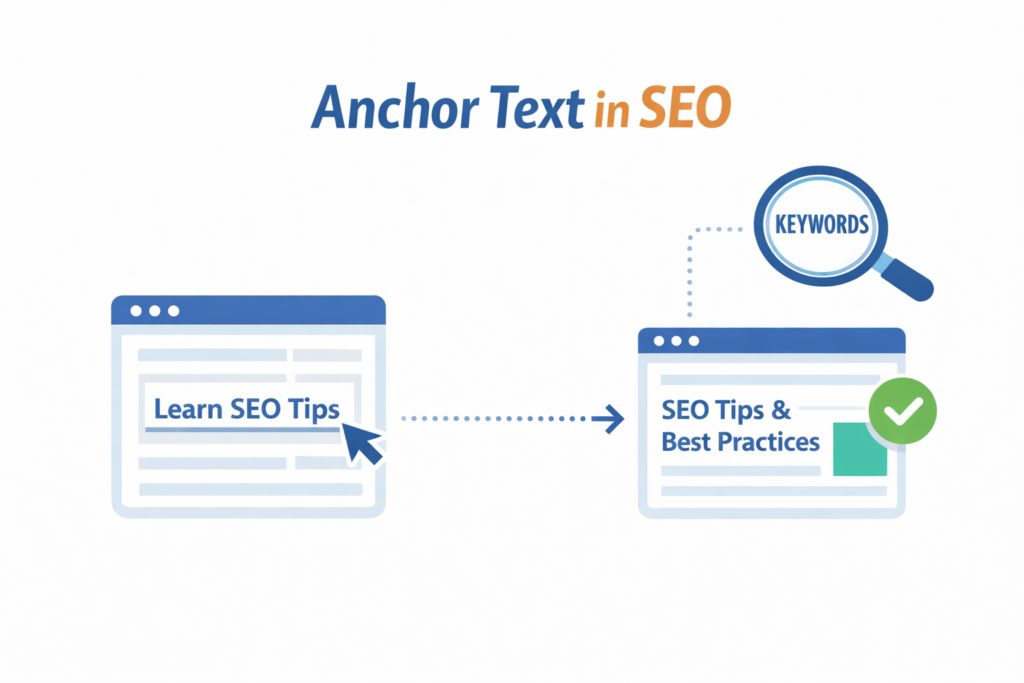
Anchor text in SEO is the clickable text used to link one webpage to another. It helps both users and search engines understand the context and relevance of the linked page.
When writing SEO-friendly content, anchor text is used to connect pages within the same website (internal linking) or to link to external websites. It is usually written using keywords or descriptive phrases that clearly explain what the target page is about.
In off-page SEO, anchor text is also used while building backlinks. When other websites link to your page using relevant anchor text, it helps improve topical relevance, domain authority, and search engine rankings.
Why Is Anchor Text Important in SEO?
Anchor text plays an important role in SEO for several reasons:
1. Helps Search Engines Understand Context
Anchor text gives search engines clear signals about the topic of the linked page. It helps them understand the relevance between the current page and the target page.
2. Strengthens Internal Linking
Using proper anchor text improves internal linking within a website. It connects related pages and helps distribute link equity across your content.
3. Supports Rankings Through Relevance
When a high-ranking page links to another page using relevant anchor text, it passes contextual value. This improves topical relevance and can positively influence rankings.
4. Enhances User Experience
Descriptive anchor text makes navigation easier. Users can clearly understand where they will be redirected before clicking the link.
Types of Anchor Text (With Examples)
Understanding different types of anchor text helps you use them naturally and avoid over-optimization.
1. Exact Match Anchor Text
Exact match anchor text uses the exact primary keyword of the target page.
Example:
If your target page is about On-Page SEO Checklist, the anchor text would be:
“on-page SEO checklist”
This type should be used carefully. Overusing exact match anchors can look manipulative.
2. Partial Match Anchor Text
Partial match anchor text includes a variation, secondary keyword, or related phrase of the target page.
Example:
“complete guide to on-page optimization”
or
“advanced on-page SEO techniques”
This looks more natural and is safer for SEO.
3. Branded Anchor Text
Branded anchor text uses the name of a brand or website.
Example:
“Richi Digital”
or
“Abhishek SEO Blog”
This type is very natural and commonly used in backlink building.
4. Naked URL Anchor Text
Naked URL anchor text is when the full URL itself is used as the clickable link.
Example:
https://example.com/on-page-seo-guide
It is natural but not very descriptive. It doesn’t give strong contextual signals to search engines.
(Important correction: Google does not ignore it. It just carries less contextual value.)
5. Generic Anchor Text
Generic anchor text uses common phrases like:
-
“Click here”
-
“Read more”
-
“Visit this page”
These are user-friendly but weak for SEO because they don’t describe the target page.
Use sparingly.
6. Image Anchor Text
When an image is linked, the alt text of that image acts as the anchor text.
Example:
If an image has alt text “on-page SEO checklist” and links to that page, search engines treat the alt text as anchor text.
This can help in both internal linking and backlink strategies.
Anchor Text Examples (Good vs Bad)
Understanding the difference between good and bad anchor text helps you optimize links naturally.
✅ Good Anchor Text
A good anchor text clearly describes the topic of the linked page and fits naturally within the sentence.
Example:
“If you want to improve your website structure, check our detailed on-page SEO checklist.”
Why this is good:
-
It explains what the user will find.
-
It includes relevant keywords.
-
It improves both SEO and user experience.
Other examples:
-
“complete guide to keyword research”
-
“technical SEO best practices”
-
“beginner SEO tutorial”
❌ Bad Anchor Text
A bad anchor text does not describe the linked page clearly. It gives no context to search engines or users.
Example:
“To learn more about SEO, click here.”
Why this is bad:
-
It doesn’t explain the target page.
-
It provides no keyword relevance.
-
It weakens internal linking value.
Other weak examples:
-
“visit here”
-
“read more”
-
“this link”
Anchor Text Best Practices
Using anchor text correctly improves both SEO and user experience. Follow these best practices:
1. Keep It Relevant
Your anchor text should clearly describe the topic of the linked page.
Good example:
“advanced on-page SEO techniques”
Avoid vague phrases that don’t explain the destination.
2. Avoid Keyword Stuffing
Do not overuse exact match anchor text repeatedly across your website or in backlinks.
Over-optimized anchor text patterns can look manipulative and may affect rankings.
Maintain a natural mix of:
-
Exact match
-
Partial match
-
Branded
-
Generic anchors
Balance is important.
3. Use Descriptive Phrases
Descriptive anchor text helps both users and search engines understand the context.
Instead of writing:
“Click here”
Write:
“learn how to optimize internal linking”
Descriptive anchors improve clarity and trust.
4. Keep It Natural Within Content
Anchor text should fit smoothly into the sentence. It should not look forced.
Bad example:
“SEO tips SEO guide SEO tutorial”
Good example:
“If you’re new, start with this beginner SEO guide.”
If it sounds robotic, it’s wrong.
5. Focus on User Experience
Anchor text should make navigation easier.
When users clearly understand where a link leads, they are more likely to click and stay on your website longer.
Better engagement can indirectly support rankings.
Common Anchor Text Mistakes to Avoid
Using anchor text incorrectly can harm both user experience and SEO. Avoid these common mistakes:
1. Overusing Exact Match Keywords
Using the same exact match anchor text repeatedly across multiple pages looks manipulative.
For example, using “buy cheap shoes” in 50 different articles as anchor text appears unnatural and over-optimized.
Search engines may interpret this pattern as an attempt to manipulate rankings.
Instead, maintain a natural variation of anchor types.
2. Using Too Much Generic Anchor Text
Generic phrases like:
-
“Click here”
-
“Read more”
-
“Visit this page”
do not describe the linked content.
While they are acceptable occasionally, overusing them weakens contextual signals and reduces SEO value.
Descriptive anchor text is more effective.
3. Linking to Irrelevant Pages
Anchor text must match the topic of the target page.
If you use “technical SEO guide” as anchor text but link to a social media marketing page, it confuses users and increases bounce rate.
Relevance is critical.
4. Adding Too Many Internal Links on One Page
Adding excessive internal links can overwhelm users and dilute the value of each link.
Instead of linking every sentence, link only when it genuinely adds context or supports the topic.
Quality over quantity.
Conclusion
Anchor text plays a crucial role in SEO by connecting related pages and providing clear context to both users and search engines.
When used correctly, it strengthens internal linking improves topical relevance, and enhances user experience. The key is to keep anchor text natural, descriptive, and relevant to the target page.
Avoid over-optimization and generic phrases. Instead, focus on clarity and value.
If your anchor text helps users understand where they are going before they click, you are applying SEO the right way.